Monday, April 29, 2013

備えあれば...

備えあれば憂いなし: if you are well prepared, it is said, you need not worry.

2013-02-24_Takanashi016

I know I've mentioned professional development in passing before, Nick, but it really is one the major platforms of my tenure here in the Teaching Exchange Program.

It has been a key issue ever since I first interviewed for the position, where I received a slightly less-than-inspiring response to the question of employee-support after the termination of the three-year contract. Now I understand this is of no fault of the committee: as a de facto hiring firm, their job is to recommend the best candidate to the hiring agency, not dictate the terms of the position. And as a volunteer organization, they can offer the support and interest of the community, but make no promises or guarantees of post-employment placement. However, as someone who had to leave a very stable position with plenty of upward-mobility potential, moving even laterally to a place whose only guarantee was negative-mobility was daunting.

In talking about this issue with other foreign workers in various education positions throughout Kashiwa, it has become more and more clear that I need to continue to work to ensure that when I leave Ichikashi I take with me much more than just fond memories.

And while the onus to pursue professional development always falls on the employee, because of the very finite nature of this position, an emphasis of this program should be on fostering an atmosphere that illuminates the value of and encourages participation in continuing education, both in terms of practical skills via on-the-job training as well as academic theory and practice.

This would seem attractive in two ways:

First, in supporting ongoing professional development for even its temporary employees, Ichikashi would be better served by instructors who are trained in the newest techniques, guaranteeing that the foreign language teaching at Ichikashi would remain current and progressive. Ichikashi would then be at the forefront of Language Education, attracting high-quality candidate-students interested in receiving the most up-to-date and effective foreign language instruction and training.

The second is that in pursuing professional development, the workers themselves are better prepared and much more competitive when they re-enter the candidate pool with not only years of practical, in-class experience, but also technical training and certification which also acts as proof of an interest in ongoing training. This, in and of itself, is an asset for any employer looking for proactive, conscientious workers.

Such a change, in addition to fighting for the distinction of 外国語講師 (Foreign Language Instructor) over the oft-pejorative "ALT" title, should elevate the desirability of the position. Not only is the institution, then, seen as actively interested in the well-being and development of its employees--which makes the institution a desirable place to work for--but the Foreign Language Instructor position at Ichikashi avoids the stigma of being a "dead-end job" for people who lack ambition or a "sabbatical-position"--the kind of job one has to take a "break" from a "real career" to pursue.

Earlier I was talking to a colleague who works at the Board of Education as the Foreign Language Education Coordinator about the plethora of options available to any teacher living in Japan, and yet how hard it often seems to get people at any level of administration interested in investing
1Even just "time."
1 in the professional development of their small army of "temporary workers." It is not surprising as they are just temporary; after three years they practically disappear.

And partly it is that sort of casual dismissive thinking that hurts language teachers in Japan as it theoretically limits their value after matriculating through such programs. If these employees are not worth any professional investment from their current employer, they are hardly worth more potential investment by future employers. And, realistically, the observability of this end-result affects the kinds of applicants that would find such teaching opportunities interesting but who would also be deterred by such a potential "gap" in their resume.

I am not proposing that Ichikashi mandate professional development courses into their Exchange Teaching Program, but make accommodations for those teachers interested in professional development to make it a reasonable career path to pursue.

As the list of resources (CELTA, CertTESOL, DipTESOL, &tc.2
2Or how about even a JLPT?
) on the above-mentioned kALTitude website notes, a number of 3-month distance learning certification programs are available to educators, as well as one-month long intensives specifically targeted at teachers in Japan by being scheduled in August, the one month in the calendar year that Japanese teachers don't have any scheduled classes.

My proposition is this: at Ichikashi, as a full-time member of the faculty, we are expected to be on campus even during non-academic days, available to do work as needed, such as lesson preparation. However, teachers are allowed to take non-academic days off by using vacation days. As it stands, if I want to take part in the one-month CELTA certification program, I would have to use more than 18 of my vacation days. Yet if we consider the professional development of the Foreign Language Instructor as a functional part of "lesson preparation," a special dispensation could be made to allow for off-campus non-instructional work hours, akin to "chaperoning" or "off-site business meetings."

Once such an allowance is made then funding options could be considered. Though that may be one bridge too far.

Anyway, I incessantly remind Kashew that we need to constantly be looking forward to the day that we are no longer employed at Ichikashi. Unlike so many other jobs, we have the advantage of knowing well and good that our contracts are finitely
3*infinitely?
3 terminal. That means that at the end of our three years here, if we are mindful of our position, we can maneuver ourselves to be better situated, more experienced, and therefore much more desirable as hirable commodities when we leave.

While Ichikashi provides us with excellent opportunities for personal growth, we also need to continually be aware that personal growth does not easily show through on a paper resume. Rather, with our time at Ichikashi we can both grow personally and professionally and really create resumes of distinction. And if Ichikashi will allow itself to be a conduit through which professional development is not just offered but encouraged and fostered, it may be impossible to imagine how much more educationally effective and professionally desirable the Teaching Exchange Program can become.

Monday, April 15, 2013

Benzaiten by the Bay

At approximately 2.5 miles in circumference1
1Yahoo!Answers assures me that it should take no longer than 40 minutes to circumnavigate. Don’t you tempt me, Yahoo!Answers!
, Enoshima (江ノ島) is a small island off the Kanagawa (神奈川) coast only a few stops from the 大仏 in Hase (長谷) along the historic, beach-gliding Enoden Train Line (江ノ島電鉄).

Dedicated to Benzaiten, the Buddhist goddess of 'everything that flows,' the once-sacred island hangs at the end of a tombolo, an emerald necklace that dangles into the Pacific blue from the proud neck of 神奈川県.

Believed to be raised from the sea floor by the goddess herself, the island houses three temples in her honor, the most notable of which memorializes her love affair with and then subsequent banishment of a five headed dragon that had begun terrorizing the island and surrounding area. Well, technically, the most notable temple is the one with a nude statue sculpted in her honor, but the dragon one has to be at least top two.

2013-03-19_Kamakura-Enoshima030

The main draw of the island, apart from its adopted tropical feel and semi-decent views of the southern coast, are the Iwaya (岩屋) Caves.

At the end of an arduous hike up and down OSHA-disapproved stairs over the twin-peaks that make up the core of Enoshima2
2Heaven forbid that a Japanese monk dare to walk BETWEEN two hills.
, one finds a slippery-when-wet walkway among tidal pools and sharp fangs of death that leads to a set of turnstiles [¥$5].

These cool, quiet caves are a relaxing return to the more touristy philosophies of Japan.

2013-03-19_Kamakura-Enoshima020   2013-03-19_Kamakura-Enoshima023   2013-03-19_Kamakura-Enoshima022

Carved out of the side of the rock-face by centuries of waves, the narrow, low-ceilinged bores offer tourists a genuine Legend of Zelda experience, complete with random Buddha statuettes floating in calm, dark cave ponds, carvings of dragons guarding semi-precious stones, and even a couple of hovering, illuminated triforce symbols.

Okay, so they are rather the family crest (家紋) of the 北条 (ほうじょう) Clan, prolific in the Kanagawa area as the Kamakura Shogunate. But as it stands, the more I explore Japan, the more I realize that Japanese videogames were interesting not for what appeared to be their astounding creativity in producing magical other-worlds, but in their ability to recognize these other worlds in their backyards and incorporate them into their design.

However, probably of more interest3
3Or, “Of interest to more people.”
, is that the second of the two caves is dedicated to the dragon deity that once inhabited the island. Complete with carved, gold-leafed statues and jewel encrusted figurines, the East-Cave of Iwaya stands in reverence to the monster that long ago terrorized the residents of Kanagawa.

Of course, the other legends say that this dragon-terror came as a response to the prayers of 北条 時政 (ときまさ・ほうじょう), the first Hojo Regent. The story goes that Hojo arrived on the island of Enoshima bearing with him prayer and supplication for the prosperity of his offspring (then the father-in-law of 源 頼朝, みなもと・の・よりとも, the first shogunate of Kamakura). At his call, a dragon appeared4
4I like to imagine it was all Dragon-Ball-like. No, not that Dragon BallTHIS Dragon Ball.
, answering his prayer with a promise of protection for the harbor, a promise sealed with three triangular dragon scales, which is at the root of the design of their kamon.

Now, a few logistics: the far side of the island pretty much runs on temple-time. This basically means that everything closes in time for the early-bird special. This usually means that, in the summer, everything closes before the sun goes down at around 5. However, it will probably take you only 120 minutes to walk through most of the ‘historical’ parts of the island5
5I’m not quite sure what the Japanese conversion is on that, but most of that time will be comprised of you getting TO the historical parts of the island.
.

That being said, it is a nice half-day excursion. Trying to pack it in with Kamakura, however, was a little dicey, as all we could really do was get to Enoshima, take the escalators, and then run to the caves before everything closed. Of course, that did offer us a nice, leisurely stroll back through the quaint island village, as there is literally only one road that bisects the island. It’s pretty hard to miss something.

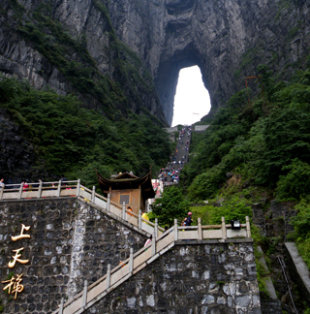
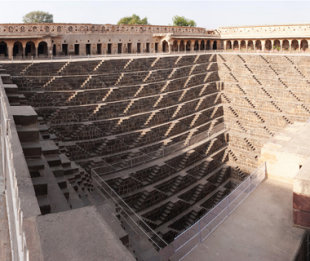
Speaking of the escalators, do it. Don’t be that fool. Now there aren’t a lot of stairs, perse. Not at least compared to Zhangjiajie City or Abhaneri, but even then, what you save in terms of efficiency-for-cost just cannot be beat. After all, even if you get a curious longing for what sights you’d possibly miss by taking the express escalator, rest assured: the escalators only go up so you’ll be walking down every single one of those stairs in the end.

But we’re getting ahead of ourselves.

Your approach begins, as most do in Japan, as a long walk from the train station through a quaint village town remarkable for its unremarkable Miami Beachfront impression. Actually, with its broadly appealing, flat wood-scaping, gravel lawns and stenciled palm trees, it felt more like approaching Redondo Beach from Knob Hill or Avenue G.

This short downhill ends at the bottom of a 4-way road underpass that births you out in front of a half-mile long walkway that buttresses a narrow shoal connecting Enoshima to the larger landmass. Pro-tip regarding this bridge: take the bus.

The entire approach, with camera in hand, I was hoping to experience one of those ‘cresting’ moments, where, because sightlines become obscured by the rise of the bridge, the divine breeches into view at the crest of the cobbled walkway as a beautiful gem pulled from the depths of the sea, glistening in the high, nautical sun. But the approach offers no such reveal. And while the island is a delightful mossy marble floating on haze and currents, skirted in the muted tones of luxury spas and patchwork village port town, there is nothing that would be lost seen through a metro-bus window.

2013-03-19_Kamakura-Enoshima017

And yet, just as unremarkable as the approach is is the port town built to act as your reception: an indiscernible hodgepodge of buildings and luxury spas of no particular make or influence. One immediately gets the sense that this particular style of unremarkableness hides a particularly remarkable secret.

But it’s no secret.

Since its founding as a pleasure garden in the late 19th century, Enoshima has since grown to become the heart of Shonan, a resort area that runs along the coast of Sagami Bay, which features the closest sandy beaches to the Kanto area.

In particular, what is not so interesting is that its beaches are kinda bland, and surf particularly weak, and the island has no direct access to natural hot-spring water. So one wonders what exactly made Enoshima, the sacred island, such a leisure hot-spot in the first place.

Nearly 20 years into their rule, and more than 10 after moving the capitol from Kyoto to Tokyo, the Meiji government [明治政府 (めいじせいふ)], in its bid to restore Japan to a more pure form of Japaneseness, wrote into law a separation of Shintoism and Buddhism in a policy called 神仏分離 (しんぶつぶんり)6
6カシェウ Saiz: Buddhism first entered into Japan during the Asuka period, at which time Shinto was the official religion of the royal family. However, under the guidance of Prince Shotoku Taishi (574-622AD), a Buddhist state was established by syncretizing both systems of deities, allowing Buddhism to gain a foothold in society, which only flourished during the Tokugawa period. Beginning in 1633, in response to the influx of Western trade and influence, Japan closed its gates (鎖国) and put a heavy emphasis on Buddhism to stem the spread of Christianity. While this effectively pushed Christianity out of Japan, this move towards Buddhism meant that more and more individuals were straying away from the country’s mother religion. Under the auspice of returning Japan to its Japanese roots during the Meiji Restoration (1868) the government tried to recenter the country on Shinto principles (which conveniently would include the deification of the Emperor) by installing a new policy: The Shinbutsu-Bunri. The policy’s written focus was to separate the Buddhist and Shinto states from each other. However, in actuality, the policy was cause to forcibly remove Buddhism from Shinto. This lead to the desecration of many temples with much of the land being taken and sold to merchants. The few who were able to maintain their properties did so by forging new temple histories. However, by falsifying these historical records to preserve the temple sites, the original stories have been lost forever.
.
This new law forced the release of Buddhist-held properties, including the sacred island of Enoshima, opening the door for land prospectors to swoop in to develop the most coveted and picturesque real estate of the time: temple property. In 1880, one Samuel Cocking, a British merchant wed to a Japanese woman, used his wife’s registry to purchase much of the under-developed high lands, turning it into a luxury garden and thriving port-town.

Kashew and I didn’t take the time to walk the pay-to-see luxury gardens, though the rest of the island’s pleasure gardens are quite quaint and relaxing. The Cocking-areas are, more or less, appropriately named for being romantically themed with snug benches possessing overlooking views of the shore or sea. They’re cute, even if it weren’t for the overabundance of friendly cats. But, again, the work-husband and I did not venture into the heart of the Love-Tunnel that was the Samuel Cocking Garden and Greenhouse. And phallicly inspired Observation Tower.

It’s a solid recommendation for anyone who has only a few things left to do in Kamakura for a second or third trip. Much more relaxing than fighting tourists in Hase or pounding the pavement in Kita-Kamakura. Of course, now I have to go back because we didn’t allocate enough time to see the Enoshima Aquarium, which was not actually on the island. Nor was it particularly visible from the island.

Monday, April 8, 2013

Tour Grounds

I’m sorry it’s been such a long time since I last posted. I know that no excuse of busyness is weighty enough to disabuse one’s blog-reading faithful, that perhaps only death is reason enough to miss a post or two. But let me tell you that gastroenteritis feels a lot like what I imagine death would feel like.

2013-02-27_BGs011   2013-02-27_BGs005   2013-02-27_BGs019

So, Nick, the Torrance Delegation has come and gone, blown in and out like the first spring winds1
1Note that Japan has a term for the first wind storm of the spring, 初風 (はつかぜ). This season's first wind with gusts up to 60kph over three days. With it came the season's first aerosol pollution and yellow sand from across the Japan Sea.
. Over that time there had been more than one long day of sightseeing, more than one high-stakes political dinner, and more than one parade of speeches (in two languages). But there was only one Ichikashi Presentation, and only one Ichikashi Campus Tour.

And while I feel like we did an admirable job, the gravity of the event, in terms of both the ELT-program’s
2New official title: 外国語講師.
2 as well as Kashew and my own reputation, does warrant some reflection.

I will spare you the nitty-gritty of the specific review; rather, I want to talk about the pre-planning strategy.

Determining scope based on perceived needs.

Obviously, it was important for us when considering what kind of presentation to give to the delegation to determine what kind of information the delegation would find relevant and interesting. Of course all of the standard information had to be there (such as a brief history of the campus and curriculum), but it would be the inclusion of and emphasis on information that they would find unique or otherwise unexplained that would make the presentation feel like a worthwhile expenditure of their time.

Thusly, we were required to ask of ourselves some very basic questions: why did the delegation specifically request to see a Japanese school on this trip? what other places and cultural activities would they participate in before (and after) coming to Ichikashi, especially those regarding forums of education? and what expertise and interest would the delegates bring with them that would influence the types of questions they would have or need answered?

Such questions were used to better anticipate the types of information that would most likely be of interest as well as earmark what information would be redundant and, therefore, could be glossed.

In looking at their schedule, we realized two things: 1) they were going to be very busy and, 2) coming to Ichikashi would be their only opportunity to see a Japanese school first hand.

And while the first point allowed us to predict that fatigue would be a major factor in our presentation3
3Which was scheduled to occur in the late afternoon before a mayoral banquet.
, encouraging brevity, the second allowed us to tailor our presentation to spend a majority of our time illuminating what it means to be a high school student in Japan from the administrative/programmatic perspective as well as illustrate activities and events that define Ichikashi life.

This was particularly relevant after reviewing the list of attendees. We found out that most of the delegates were from the Torrance City Council (including the mayor and a former mayor), and a good number had spent many years of service in local public education (including a former member of the board of education as well as the first Ichikashi ALT). We would then have to make sure that our presentation spent a good amount of time on educational politics.

So, with that being said, we knew what they would most likely be interested in: information regarding the administrative and structural differences in education between Torrance and Kashiwa. We then knew we had to talk about things like Municipal v. Prefectural v. National funding, open enrollment, and 10-year teacher rotations, in addition to the local processes of homeroom and classroom construction (both literally and figuratively).

And as TSCA representatives, Kashew and I afforded an insider’s working knowledge of Japan, and would thusly be expected to act as a cultural conduit through which the delegates could ask cultural questions without any reservation or fear of offense.

Discerning the disparity among needs.

And yet, even with this information prepared in advance, we were met with a bit of reticence in our first committee meeting. And while I will spare you the grosser details, we should let it suffice to say that what was at odds between us, as presenters, and them, as administration, was an unstated gap of perceived needs. That is the administration had some concerns that were not satiated by the outline laid out before them.

And this is fair. But it also made some of the people on the presentation-side a little upset as they felt like their ideas were left ignored in favor of a pre-decided administration-derived plan. They felt it was a waste of time for us to go to an "ideation" meeting to discuss needs when in reality we ended up just being told what our needs needed to be by the administration.

But I see it like this: an open forum of discussion is not democratic, like we pretend democracy to be. It is, after all, autocratic when a boss is involved. The openness of the forum certainly allows for all needs to be aired and made known, but these needs are not equal but are hierarchical. And while a need brought up by one of lower standing may be elevated by those higher than him as previously unconsidered, no particular need can supplant those of the boss without first satiating that need.

That is to say, simply, such meetings are a sale pitches: one must distract the potential buyer from his present concerns before supplanting them with concerns of your own making, for which you can then sell your own solution.

Bridging the gap.

Especially as the presentation was going to be offered to local Kashiwa officials as well as the Torrance Delegation, it became quite clear early on that one of the most important needs of the administration was to affirm the many ways that Ichikashi is unique among it's "competitors" (the 県立, 国立 and 私立 schools in the 関東 area). This is a valid need that could not be ignored, and one that would probably be of passing interest to those involved with TSCA. So the whole second half of the presentation was dedicated to the accolades of the various educational and club programs on campus.

This was a felt need that was easily satisfied and should have been included from the beginning. But there were other issues that were closely tied into this.

For example, in the initially proposed itinerary, very little time was afforded to a campus tour as such a thing was considered very unnecessary. Rather, the bulk of the two hours the delegation would spend at Ichikashi was allocated to a presentation about Ichikashi.

The argument that was presented, repeatedly, was that the delegation did not travel 5000 miles to Tokyo and 40 minutes by bus to come to Ichikashi to be shown pictures of Ichikashi.

After this proposition's initial failure, I felt like continuing to repeat this was the wrong tact to take.

Essentially, the best approach to moving a buttressed wall is not to push against it, but to discern which direction the buttress leans and pull in agreement to that plane. What we had to do was discern why there was hesitance in offering a tour and satisfy that concern before we could replace it with our own.

The interesting story that came out of it was the story we led off with in the tour:
This classroom is 2I. You may be wondering why we decided to show you this room. After all, there are no decorations and so it is virtually indistinguishable from every other classroom that we just passed by. Actually, that is why we wanted to show you this room: every classroom at Ichikashi, from 一A組 to 三S組, from 鹿児島 to札幌, looks pretty much exactly like this. From the west-facing windows and the north-facing wall, all classrooms in Japan look just like this.
And, really, this is why we had to convince the administration that a tour would be interesting. "Why would they want a tour of the school," they asked. "Every room looks exactly the same everywhere in Japan! Wouldn't they much rather sit in the comfortable new Arena?"

The administration's concern was that in order to be a good host they would make sure that their guests were as comfortable as possible. That there was no reason to require that a delegation of 56 70-year-olds walk around campus under the assumption that every school looks exactly the same: what could they possibly learn from seeing all of the same?

What we, then, needed to do was show them that their concern was valid, but its application misplaced.

Rather than pursuing comfort and the distribution of information as the primary function of a good host, we had to show them that while this may work in hosting a team of Japanese delegates already familiar with a Japanese schoolhouse, when hosting American delegates one must have other considerations in mind, including a hands-on tour. In order to be a good host to the Torrance delegation, they had to reconsider what ‘hosting’ meant.

Once that assurance was made—that we all agreed that our foremost role would be to ensure that Ichikashi acted a good host to leave a lasting impression upon the delegates—we could then begin to negotiate the meaning of what, exactly, it meant to be a good host.

And it went off, more or less, without a hitch. Everyone had their charm turned up to 11, Kashew and I had gone over the Ichikashi-factbook with a fine-toothed comb, and were spouting off facts and figures to the astonishment of all: Ichikashi has around 200 members involved in 吹奏楽部, making it 1/5 the total student body; 93% of all of our students are involved in at least one club on campus; Ichikashi sees 400 students test annually to enter and accepts only 300; 87% of all students who enter Ichikashi go on to some form of tertiary education. The statistics are fractally endless.

2013-03-12_Graduation165      2013-03-12_Graduation131

2013-03-12_Graduation166      2013-03-12_JudoGraduation011

Anyway, sorry for utter lack of posts, but I’ve been doing a lot of other-kinds-of-writing. I could post those, but I don’t think there’s much interest in half-edited lesson outlines, presentation speeches and schedule frameworks. Then again, there may be a budding market for erotic haikus and twitter reviews of leaked albums…

Wednesday, February 27, 2013

40x40

On February 20, 2013, Kashiwa, Chiba and Torrance, California will have celebrated the 40th anniversary of their sister-city relationship. And while the Teaching Exchange Program between the two international-relations organizations has not yet quite hit 40 years itself, with the hiring of Matthew Medlock
1That's カシュー to you and me.
1, Kashiwa Municipal High School (Ichikashi) has seen 40 different exchange teachers since the program's institution in 1979.

As Matthew and I enter into the second year of the fortieth cycle of the Teaching Exchange Program, especially in respect to the upcoming 40th anniversary celebration, we have taken a bit of time to look back at how things have changed since the late 1970s.

At the center of our program still remains cultural exchange and language training. The preponderance of our curriculum focuses on general composition for third-year students, as well as advanced-level preparatory college language training for exams and interviews. Additionally, we instruct two separate units of oral communication for specific purposes for second-year students, the first being an elective general study, while the second is an intensive language training class for Ichikashi's second-year International Studies course (国際科) and their corresponding school excursion to America in November.

Since arriving in Kashiwa to assume my post at the head of these classes, I have continually been astounded by the incredible level of support that we receive from our administration. For all the passion the city has at the political level for the Teaching Exchange Program, the practicalities are a burden to bear upon the heart of the local administration for hosting the exchange teachers. And here at Ichikashi, we have been blessed to have had Mr. Hideonobu Suda as principal (校長) for the last three years.

It has been Suda-先生's goal in his tenure at Kashiwa Municipal to increase the exposure and impact of exchange programs upon Ichikashi's student body. Since his arrival, he has made it a priority to ensure the viability of Ichikashi's student exchange programs, not just with Torrance, but with their sister cities in Australia and China.

2013-01-31_C_Kendo186

Likewise, it has been under Suda-先生's guidance that the Kashiwa Teaching Exchange Program has undergone it's most drastic transformation away from assistant language teaching.

Whereas in the old days, all classes would be taught in tandem with a Japanese language-native homeroom teacher, currently the Exchange Program instructors conduct classes without the assistance of such a "JLT," leading lessons of their own design, transitioning the role from an "Assistant Language Teacher" to a full-fledged "English Language Teacher." In fact, many of Ichikashi's flagship programs for the International Course, such as the annual English Camp, have been placed completely under the purview of the ELTs.

Over the years, the Teaching Exchange Program has provided Ichikashi with a high level of student output, by palpably increasing student performance in standardized tests, in addition to helping to place graduates in international schools and prestigious universities throughout Japan, all while maintaining national excellence in sports and the arts.

Since 2005, we have had 208 students take and pass at least one of any of the five levels of the Eiken English Proficiency Exam. And while the overall number of our students who pass any level of the Eiken has declined recently (from 29 and 34 in 2005 and '06 to 19 and 25 in 2010 and '11), the percentage of students who have taken and passed the highest levels of the Eiken (for our purposes, Pre-1st and 2nd Grade) has gradually been increasing. There is a thought that the curriculum change in 2009 to accommodate a larger emphasis on sports clubs has adversely affected interest and preparation for the Eiken. However, the proportion of students who successfully take Eiken Grade-2--the language requirement for second-tier schools such as Kanda--has remained relatively consistent throughout the years.

Similarly, over the last four years there has been an increase in the number of students (82.7% - 87.4%, +4.7%) who attend college after leaving Ichikashi (either a 4-year college, 2-year college, or specialty vocational/trade school--専門学校), including an upward trend within the Foreign Language Department (80.4% - 92.5%, +12.1%)
2Fun fact: the Sports Science Course (スポーツ科学科), the second of the two specialty courses offered at Ichikashi, placed 91.2% of it's students last year in college.
2.

Upon matriculation, with regularity, these students can expect to be prepared with an education worthy of entrance into the top 25-30th percentile of private universities in Japan, which includes acceptance to schools such as Kanda Gaigo and Komazawa, with many of our top students finding acceptance in top-tier universities, including admission to Aoyama Gakkuin, Tokodai and Waseda.

2012-09-14_Bunkasai016

Figuring that the effectiveness of the program is rooted in the cultural experience of an American-education sensibility in consultation with the copious native resources at the English language teachers' disposal, such consistent, high-level output has been rewarded, administratively, with trust and a hands-off approach. And while this may be the dream arrangement for many educators, often it is not without struggle and confusion for the ELTs, some of whom arrive at the front doors of Ichikashi with very limited experience in lesson or program planning.

Even more so, such institutional freedom is not limited to the academic aspect of high school education. Once settled into the routine of lesson planning, teaching, and managing the campus English Conversation Club, the ELTs are encouraged to pursue as many avenues for cultural exchange and education for personal growth as time would allow.

Not only do we find a ready conversation in English with the 11 other teachers in the Foreign Language Department
3Fun fact: Ichikashi is one of the few schools in all of Chiba that offers a Chinese Language Program. In addition to having one full-time Chinese teacher in residence, we also host 2 part-time Chinese ALTs.
3, just about everyone on campus is more than willing to share with us their little piece of Japan, whether that be their slice of the office in the home economics hall, weekly contemplation on their hobbies and crafts like 書道 or 生け花, or personal travel recommendations for trips to and around hometowns. It is actively promoted that we ingratiate ourselves into the communal fabric of Ichikashi, and not just in the teachers' office.

If given the interest and wherewithal, Ichikashi ELTs are highly encouraged and soundly welcomed to incorporate themselves into club activities. My predecessor, Geoff, regularly participated in basketball practices and even Matthew has begun contemplating visiting the volleyball club at the request of the boys’ head volleyball coach. I find myself in the 柔道場 most weekdays and just about every weekend, where my duties include assisting the coach with clerical duties and chaperoning, impromptu English quizzes in vocabulary and culture, and even training for my own 黒帯試合.

For as much as this opportunity continues to offer us personal and professional challenges that will undoubtedly benefit us in whatever careers we pursue in the near future, it is our desire to do our part to ensure that the Exchange Teaching Program continues to grow, as the campus itself continues to expand with new classrooms and athletic facilities to suit the ever changing needs of education in the twenty-first century.

Certainly, Ichikashi has long been an attractive destination among Kanto high schools for its specialty clubs, drawing students from all over Chiba and Tokyo for sports and music
4Fun fact: 1/5th of our student body belongs to 吹奏楽部.
4, some who commute two hours by bike, train and bus from places like Tokyo to come to Ichikashi. Ichikashi is also well positioned to take advantage of its unique access to resources in terms of English language and intercultural exchange, and as such, we look to continue to challenge the ELT program to grow into an international-education program befitting a campus of Ichikashi's stature.

In addition to attempting to solidify a reusable lesson cycle for the composition and oral communication courses, a main target we have is to see the expansion of the ELTs and the English Conversation Club footprint locally and in the broader Kashiwa community. For example, at school, twice a week we lead "Lunch with Kevin and Matthew," a focused English conversation opportunity for every student enrolled in the International Course. Recently, we have tasked the ECC with leading these discussions, creating safe spaces on campus for language exploration and exercise for non-ECC students.

Off campus, we are looking to improve Ichikashi's standing within the community by pursuing programs such as ECC English tutoring to positively impact the area through English education. Additionally, we have turned an eye to improving Ichikashi's standing in the academic sphere by increasing participation in community academic events such as speech contests and the Eiken Exam, which will be done in tandem with reviewing best teaching practices to more directly and accurately target English for the specific purposes of testing.

Individually, as instructors, we are continuing to build the credibility of Ichikashi in the community at large by participating in Kashiwa city functions, as well as being active members of community groups such as the Kashiwa International Relations Organization by teaching weekend English classes, judging speech contests, or helping out at their annual matsuri.

And yet, just as importantly, we seek to diligently remember to act as a bridge between the ALTs and ELTs that came before us by setting up means and relationships through which we can pass on what knowledge and experience we gained to those that are yet to come. After all, a target goal of the program should be to train the Exchange Teachers for life after Ichikashi.

While a member of the Ichikashi community, a mentorship objective should be assiduously pointing its teachers forward in the anticipation of the expiration of their maximum three-term contract. This not only entails providing on-the-job training in both teaching and lesson planning, but also provide experience in administrative tasks such as program planning (from conception to coordination to completion to review) and management for both professional and personal development.

The Kashiwa Teaching Exchange Program has historically acted as a springboard for its constituents, seeing former employees move on to rewarding careers in and out of education as teachers, professors, counselors, administrators, businessmen, and entrepreneurs.

2012-11_1yrSportsDay021

Every day we are exposed to the benefits of cultural exchange, how students' lives are impacted and influenced by the work of TSCA and KIRA by bringing two distant and distinct parts of the world together. We are excited by the privilege and honored by the responsibility of being included in the historic tradition of the Teaching Exchange Program passed on to us as by those that came before. Likewise, we look forward to the day when we too will hand off the privilege and responsibility of ELT instruction to those that will come after us and hope that we have done our part as stewards to usher the program into its next 40 years.

Thursday, January 17, 2013

Contrasting Rhetorics

"Sometimes when I watch Japanese politicians speak on TV, I am a little embarrassed." A small consensus was building among the adults in the 英会話, the English conversation club. "Compared to American politicians--even their wives--Japanese people sound foolish when they make speeches."

We were just finishing up a conversation on rhetoric in the public sphere. I had introduced the topic with a couple of articles that I pulled off the internet about "Reading Level" and "Reading Difficulty" as a way to introduce variable English forms for Specific Purposes.

And while the topic of EfSP was interesting to them, they naturally gravitated to comparable experiences they've had with the immediately accessible rhetoric of the public sphere, which meant contrasting the speaking styles of political candidates.

"American speakers," they were adamant, "sound much more knowledgeable, much more professional than Japanese speakers."

It was decided, then, that all speakers throughout all of Japan could learn a thing or two from American speech makers.

"But, Kevin-sensei," one of them inquired, "do you think that she wrote this speech herself? That what she is saying is truly what she believes?" I couldn't help but smirk to myself. There's nothing quite like a lesson plan coming together. "Or that she is saying it this way because she knows it sounds more beautiful? Or that this other speech is written in a more simple style because the people she's trying to speak to understand it better?"

The smirk was spreading into a smile. My arms were smugly crossed over my chest and my legs were halfway to being propped up on the desk.

But he didn't stop there.

After a beat, he shook his head and continued. "I know it sounds nicer; American speeches, that is. But American rhetoric is all just for show. I prefer Japanese speeches because they're more clear: they're more real."

Wait. What?


As Massimiliano Tomasi writes
1Tomasi, Massimiliano. "Studies of Western Rhetoric in Modern Japan: The Years between Shimamura Hōgetsu's Shin bijigaku (1902) and the End of the Taishō Era." Japan Review 16 (2004): 161-190. Print.
1, it would be disingenuous to suggest that Japan had no rhetorical history prior to the Meiji Revolution. One would be heedlessly ignoring centuries of poetic and homiletic tradition in favor of a white-washed narrative that, while more simple, would simply be wrong.

But no matter how fascinated Buddhist monks seemed in "the power of the spoken word," even Tomasi cannot ignore the great impact that the Western "science" of rhetoric has had on the development of a Japanese rhetorical tradition. Or, rather, the dramatic stagnation.

Tomasi, himself, begins his article by noting that he had begun to do research on the topic because he was tired of scholars assuming that Japanese rhetoric originated during the Meiji Restoration (明治維新, めいじいしん: 1868-19812), arguing that these academics ignore the vast collection of works written during the Heian (平安: 794-1185) and Kamakura (鎌倉: 1185-1333) periods. But he also notes that much of what passed for rhetorical tradition was more-or-less poetics, being that a vast preponderance of public speaking was reserved for preachers and teachers, done in a sort of "one-way form of communication that often placed the speaker in a position of superiority" (162). For pre-restoration audiences, the content was compelling not because of the veracity or logicality of the argument, but strictly because of the credentials and expertise of the one who speaks.

Since the primary function of rhetoric is to appeal to the audience's trust with logic and feeling--the building of one's own oratorical credentials--the strict adherence to the teacher-apprentice dynamic renders much of rhetoric as a field of study pointless. After all, one listens to a doctor because of the certificates on his wall which guarantees (supposes) experience and wisdom, not because of the smoothness of his bedside manner. Or at least most of us do.

It was not until the Freedom and Popular Rights Movement (自由民権運動, じゆうみんけんうんどう) that "the authority of the speaker was now no longer taken for granted" (163). "The orator had to win the confidence of his audience and persuade them of the veracity of his arguments" (163). As a "framework around which ideas and information could be exchanged," rhetoric, as a field of study, was primed to make its grand entrance into the realm of Japanese discourse (163). But things are never so easy.

In the west, rhetoric was the champion of progress and democracy, allowing every man the right to frame and credential his own argument, separate from himself, allowing the arguments posited to stand upon their own merit. Despite this opportunity, discussions regarding oral communication squarely placed the study of "rhetoric," or 言文一致 (げんぶにっち, or "unification"), on the outside of democratization. In Japan, rhetoric was seen as focusing on ornamentation, eschewing effectiveness and content in an attempt to sound highfalutin.

The preponderance of academic minds believed that 文壇 (ぶんだん--"bundan") was the true tool of the common man. 文壇 was deemed the "language of the people," focusing on Realism and Naturalism in writing, setting up rhetoric as antithetical to this populist movement. A call was made by the highest thinkers for a "literary style devoid of rhetorical elements," arguing against "any form of elaborate expression that might compromise the truthfulness of facts and events" (164).

It is because proponents of rhetoric bought into this false dichotomy that such thinking still persists today. Many of the people I've talked to about rhetoric
2Anecdote.
2 still believe that rhetoric represents the antithesis of faithful and concise writing, suggesting that all rhetoric is akin to affectation.

It wasn't until late into the Meiji Era that "vernacular choice" was included within the structures of rhetoric. 五十嵐力 (Igarashi Chikara) dropped the hammer in his 1909 work, 新文相講話 (しんぶんしょうこうわ), noting that (as Tomasi summarizes), "the difference between the old [vernacular] and new [rhetorical] styles did not lie in the presence or absence of rhetorical devices, but in the very nature of those devices" (172). In fact, "writing without rhetorical devices was itself an extreme rhetorical artifice" (172). To choose to write in plain Japanese without ornamental embellishment was, in deed, a rhetorical decision: between the "Rhetoric of Romanticism" and the "Rhetoric of Realism" (175).

But by the time Igarashi wrote his treatise, interest in rhetoric as a field of study had waned
3As I'm sure yours has.
3. 言文一致 had firmly rooted itself as the predominant style of public discourse and writing, a style that unflaggingly remains popular today.

This uncritical approach to rhetoric probably does not seem out of place to anyone who has spent any time in a Japanese community. Especially because the more time one spends in Japan the clearer it becomes that the one thing that Japanese people love more than anything else seems to be making speeches
4It's quite possible, however, that Japanese people love making non-Japanese speaking people give speeches in Japanese, but that's a completely different topic, though not unrelated...
4. Everywhere I go and at nearly every occasion I've been to, I have had to give a speech. Judging a speech contest? Make sure you have words of advice for the closing ceremony. Bringing お土産 to your 部活? You should prepare a short welcome-back greeting to hand out with the chocolates. Invited to a 飲み会? Bring a notecard along with your payment.

It's hardly ever a big deal: everyone takes a turn to stand up, gives a 10-second speech--most likely a thank you to so-and-so for their hard work or a wish for success on some future-endeavor--takes a drink, and then sits down. The floor is always open, and, as boys to the pied piper, nearly everyone takes their spin to the music.

I suppose it makes sense. For many Japanese, public speaking is just another platform for "polite" speech: the recitation and manipulation of a prefix set of words and phrases, tweaked for political or humorous effect. At least when one extols "plain speech," public speaking becomes a low-stakes game.

But this is a hard transition to make, psychologically, for me (and for Kashew
5People have been mentioning that they are having a hard time distinguishing between the multitude of "Matthews" in my life, so I've taken to noting my work-husband-Matthew as "Kashiwa Matthew." But since that's a lot of letters (and I'm nothing if not lazy), I figure that if it was written in Japanese it would look more like this: かしわマッシュ, which can then be summarily summarized, in a most Japanese fashion, as か (for かしわ) and シュー (for マッシュ), or かシュー: "Kashew."
5). I mean, if you think about it, public speaking in America is a pretty daunting task, in which the power lies in the implications of performance. In American public speaking, the stakes are high because a public address is a showcase of proficiency: miscues, mistakes and missteps are marks against one's intellect and character. It is a veritable "first date" for the academic; it is the absolute best product one can expect from the performer.

As such, the performative expectations are high, so the stakes are elevated.

It's a hard cultural difference to overcome. It's hard not to over-think a 10-second speech; to give up concern for sounding eloquent or composed or even funny, all things I am highly invested in pretending to be.

And while my students would incline to suggest that Japanese speeches should be free from the burden of rhetoric, and is therefore liberating, even the consideration that one can decide to be eloquent or plain is a rhetorical decision we are forced to make.

For now, my 10-second speech always begins with the very eloquent, "ごめんなさい、私は日本語を全然喋りません." This is a linguistic marker that instigates the exchange of a series of culturally-necessary responses that consumes all of my allotted speech space by the time it runs its course.

This--like saying "行ってきます" when leaving the office just because it elicits a requisite "行ってらっしゃい"--is just one of the ways that I play at manipulating the constructs of High-Cultural systems for my own personal enjoyment.


Endnote: I've got a lot of unrelated sports photos backlogged. They're all from the 一年生 Sports Day to the 冬県大会 from November and December... Please peruse at your leisure.

2012-11_1yrSportsDay003     2012-11_1yrSportsDay021     2012-11_1yrSportsDay029

2012-12 Winter KenTaikai     2012-12 Winter KenTaikai     2012-12 Winter KenTaikai

Monday, December 17, 2012

Moon Island and Six-Tree Hills

As we walked down the terra-yellow, slate stone walkway towards the illuminated plaza below, Matthew mused probably more to himself and the space around him than to anyone in particular, "tonight was fun; we should do it again."

This was entirely true. It felt like we were walking in the midst of a floating world, where trivial things like time and cost have no relative bearing. Where jokes and good times go down like shots of whiskey, which burn bright and warm in the otherwise sharp and cutting cold. Where everything takes on a fond, amber glow, and yesterday and tomorrow seem so far away that they almost will never matter any more.

We had taken a mid-morning train into Southern Tokyo. One of our teacher friends at 市立柏 was performing at a recital in Kachidoki (勝ちどき), an upscale area swathed in new money. So, dressed to the nines (or, in our case, 6 or 7 out of 9) we made a day of it, as we drifted from one swanky scene to the next, finding our way through romantic happenstance to Nishinaka Street in the Tsukishima (月島) district, another landfill project dredged from the depths of Tokyo Bay, famous for its surfeit of monjayaki (もんじゃ焼き) and okonomiyaki (お好み焼き) shops.

Eventually we ambled our way to the upscale areas of 六本木, Mid-Town and Roppongi Hills, to take in their Christmas "Illuminations" and rub elbows with the rest of Tokyo's young and affluent.

2012-12_Roppongi001

It has actually been a while since I've been on any trips of any length. Not even these kinds of short, one-day excursions that literally defined every weekend of my first year in Japan. That isn’t to say that I haven’t been traveling. A few weeks ago I boarded the bus for my first trip to Chiba City. Granted, that bus was the school bus and the trip was pretty much a business/field-trip to chaperone students to their 県大会. But now I can say that I've been there twice!

"I do miss this sort of adventuring," I remarked. Yet I really do love the things that I have been doing with 部活動 and, unfortunately, that means that I have to choose. But when I find myself at school every single day of the week, it's easy to see how small my world can seem to become sometimes.

And yet small doesn’t necessarily mean bad. It just means that I have to be much more intentional about exploring the places that I find myself in. In remembering to stop and try that quiet looking soba shop I pass by on my way from the bus stop before I walk into the bento shop on my way home. In planning to arrive an extra forty minutes earlier to walk through that small shrine I always see on the bus ride to school. It’s the same here as it is everywhere: I have to be intentional about setting aside time for myself to explore the more interior spaces of places and ideas.

I love traveling. In fact, I'd put traveling on my short list of "greatest things I can do with my free time," right along side of coming across a killer "shuffled" playlist on iTunes, knocking out rounds of the "Weekend Dungeon" in Puzzles and Dragons, and avoiding those putrescent puke-piles Tokyo-ites call "もんじゃ焼き".

It's just now I'm doing a different kind of traveling. I've been pouring myself into a different kind of tourism. The intimate, daily grind of 部活 and 武道 has become an essential part of my own daily grind and is an invaluable aspect of my personal experience of cultural exchange. But it needs be remembered that tourism has it's value, that the material aspect helps root and tether the abstract and etherial.

It's odd to think that the floating ephemera of Tsukishima and Roppongi Hills can tie or bind anything other than one's credit score, but the tangible and historical helps remind me that every narrative exists in a gritty, complex network, the kind of multifariousness that systems-of-thought and critical theory can oftentimes gloss over or white-wash for the sake of harmony and coherence. Even in Japan. Especially in Japan.

So, for now, I will revel in Matthew's experiences; a conduit through which I can renew my own experiences of unfamiliar tangible forms of Japan.

Thursday, December 6, 2012

My Future Job (SJ: 12/05)

三年生 - A(2):
I want to be an astronaut in the future. I like space so I want to go to space. Therefore, I have to start studying about space science. I don't know about space. If I can go to space, I want to do a space-walk.

I'm interested in planets. I like Mars, Jupiter, and Saturn. I'd like to study about planets. I'd like to experience zero-gravity.

On the other hand, the bad thing is space food. I don't have a good image about space food.

If I want to be an astronaut, I should study about Mars then people can live on Mars in the future.

It is difficult for me to be an astronaut, so I want to be an English teacher.